Moving from the extreme heat of the Australian tropical summer to the English ‘spring’ this year was welcome change. After having spent the last six years in tropical north Queensland studying amphibian disease, ecology and evolution, a new job as a lecturer at Plymouth University was a complete and welcome change of scenery. I am very excited about teaching and developing exciting research projects with students, and am looking forward to working in Latin America again, where I am originally from.
News and events for staff and students in the School of Biological Sciences at Plymouth University
Wednesday, 12 June 2013
A tropical import
Moving from the extreme heat of the Australian tropical summer to the English ‘spring’ this year was welcome change. After having spent the last six years in tropical north Queensland studying amphibian disease, ecology and evolution, a new job as a lecturer at Plymouth University was a complete and welcome change of scenery. I am very excited about teaching and developing exciting research projects with students, and am looking forward to working in Latin America again, where I am originally from.
Friday, 31 May 2013
'Schools Go Wild': OPAL Competition Encourages Budding Scientists to Study Ecology
Over 130 school pupils from around Devon and Cornwall got the chance to explore the fascinating world of science and nature at an event on campus recently.
OPAL South West and the School of Biological Sciences held a free day of activities for local primary, secondary and special schools to teach and inspire young people about the natural world around them.
Children from 14 different schools attended and were able to examine tropical bugs in a University laboratory, have a go at making a cloud and go on a spider hunt in the old walls around campus. Children were able to discover some local wildlife, and talk to scientists and researchers from the School of Biological Sciences about the important of science and understanding the world around us better.
Friday, 10 May 2013
Plymouth Woodland Project is launched
Alison Smith has secured a £55,000 grant from The Heritage Lottery Fund to start the Plymouth Woodland Project. At the moment, Alison is the community scientist with Open Air Laboratories (OPAL), based in Biological Sciences at Plymouth University.
Alison herself has recently started a PhD with Paul Ramsay on woodland monitoring in Plymouth and rural Devon. An important part of her PhD involves the use of sophisticated scientific monitoring to refine the methods that could be used by citizen scientists in the future.
It is anticipated that undergraduate students on our courses will have the opportunity to help out with the project and some will be able to do their own research work as part of the wider Plymouth Woodland Project.
You can read more on the grant and project launch in an article from the Plymouth Herald here.
Incidentally,the University was awarded more than £600,000 last year by the Heritage Lottery and Big Lottery Funds, as part of the The Parks for People programme, to restore Drake's Reservoir as a city landmark. More on this project here.
Alison herself has recently started a PhD with Paul Ramsay on woodland monitoring in Plymouth and rural Devon. An important part of her PhD involves the use of sophisticated scientific monitoring to refine the methods that could be used by citizen scientists in the future.
It is anticipated that undergraduate students on our courses will have the opportunity to help out with the project and some will be able to do their own research work as part of the wider Plymouth Woodland Project.
You can read more on the grant and project launch in an article from the Plymouth Herald here.
Incidentally,the University was awarded more than £600,000 last year by the Heritage Lottery and Big Lottery Funds, as part of the The Parks for People programme, to restore Drake's Reservoir as a city landmark. More on this project here.
Monday, 22 April 2013
Slapton Field Course - Student View
Field course attendee Jodie Thompson on the fieldcourse from a student perspective:
"As a student who has already visited the Slapton Ley Field Centre as part of A-Level Biology, this second trip has by far surpassed the first. The activities we participated in were much more fun than say looking at the effects of trampling on plants. I never quite realised how many species of birds looked extremely similar so identifying them was somewhat difficult, especially if they were flying away really fast! Invertebrates were also not so easy to always identify as sometimes we could only go as far as the order name. The weather for the most part stayed either sunny or overcast so that certainly raised our spirits out in the field! Although admittedly going to Down Farm on the first day dampened our high spirits due to the bitter cold, our hands almost felt like they had been frostbitten! I’ll never say my hands are cold in such vain again... Some of my highlights of the field course were visiting Prawle, the woodland area, going bat watching, constant pranks in the Mercer Ground Floor corridor due to no lecturers being present [responsible adults and all that - Ed.] and most importantly getting to know my course mates a lot better. I think we’ve become a much closer stage group through this trip and that’s definitely a positive. If future students read this, you should look forward to the trip but definitely be prepared in terms of different weather conditions and as Sarah says, “bring a sense of humour with you!”
Fundamentals of Ecology Days 3 and 4
The last two field days were spent around Slapton Ley itself looking at the effects of anthropogenic disturbance on the fauna. The Ley is a really good place to study this as at one end, there is the town of Torcross where Ducks are fed and used to people while the other end is closed to all except for a handful of researchers. Likewise, some of the woodland is open access while other parts are closed. This allowed us to look at how the fauna both reacts to people and at the distribution of mammal, birds and invertebrates around these contrasting environments. The final day consisted of group presentations on an aspect of the field course and the identification spot test before returning to Plymouth!
(all photos copyright of Jodie Thompson)
![]() |
| Feeding the ducks at Torcross |
![]() |
| Identifying Invertebrates |
![]() |
| Partial group photo |
![]() |
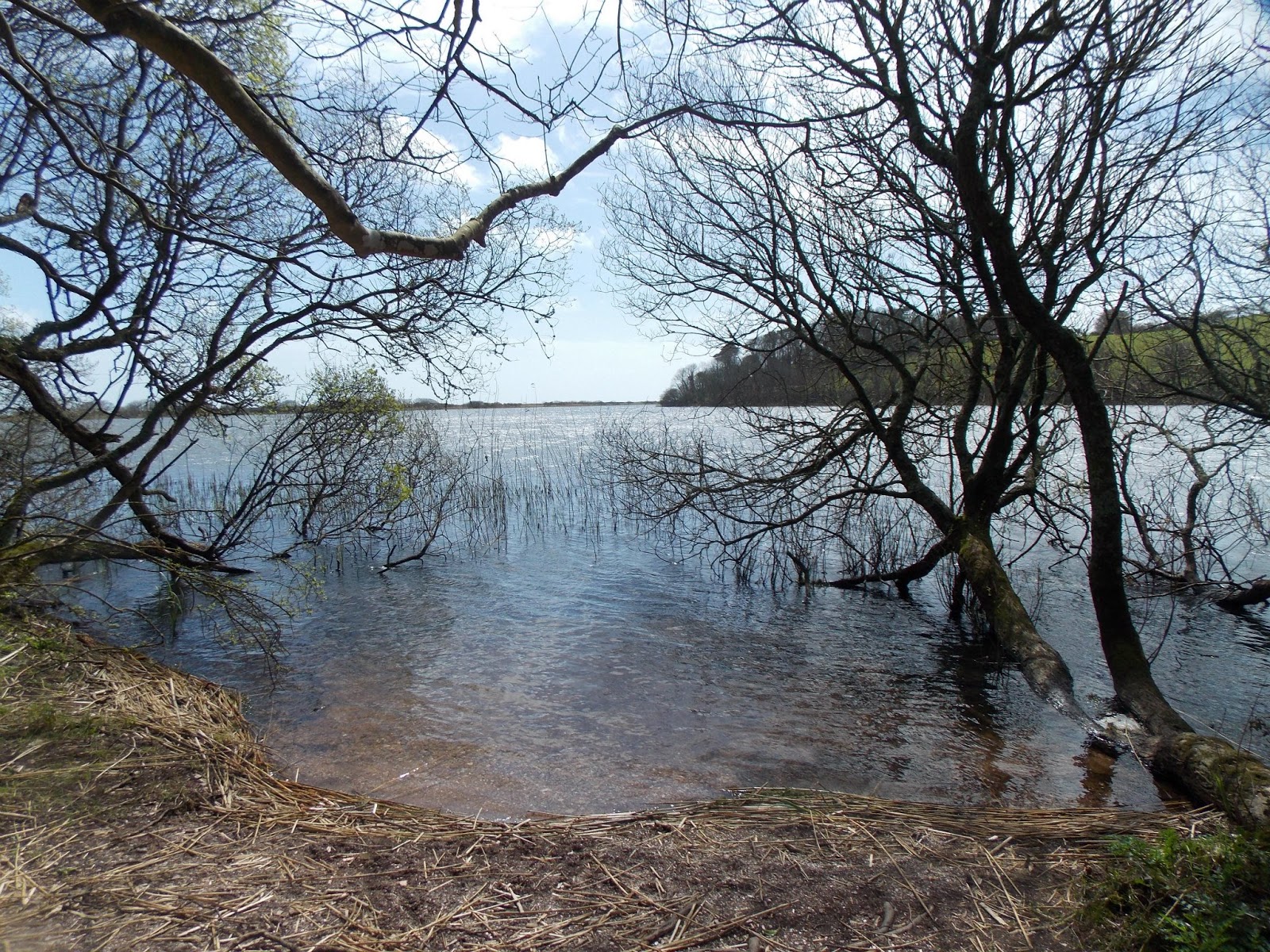
| The Ley |
![]() |
| Scanning the Ley |
![]() |
| The sun came out at least! |
![]() |
| The group at the field centre |
| Tufted Duck on the Ley |
Tuesday, 16 April 2013
Fundamentals of Ecology lab work
The FSC centre here at Slapton allows us to use their classrooms for some "lab" work when we come back from the field. Students are able to collate and analyse data and use the microscopes to identify invertebrates. It also allows the staff to give briefing and debriefing sessions.
Fundamentals of Ecology Day 2
The second rotation of the first two days was a visit to Down Farm on Start Point. This farm is managed under Higher Level Stewardship for wildlife by Richard Voss. The students looked around the farm and saw the methods being used to make it more wildlife friendly, sampled for invertebrates and met some of the animals.
Rob Parkinson extolling the virtues of good old fashioned manure management for farming and wildlife (again!). (The author of these notes is trying very hard not to write "Rob talking crap again")
Invertebrate sampling - are there any bugs brave enough to put their heads above ground on another cold, misty and windy day. Students also looked whether there were more invertebrates in rough grassland than arable fields.
The other half of the group was at Prawle looking at the Cirl Buntings which allowed for more gratuitous Oil Beetle shots!
Not so nice was this Guillemot that seems to have some problems with its feathers, possibly due to the polyisobutene spill that is affecting Guillemots in Devon and Cornwall. Incidentally, it was the Environmental Research Centre at Plymouth that first identified this compound as the cause.
Each evening, after the excellent dinner provided by the centre, small groups of students are going on Bat Walks looking at two roosts locally and using bat detectors to detect feeding bats on the Ley.
Rob Parkinson extolling the virtues of good old fashioned manure management for farming and wildlife (again!). (The author of these notes is trying very hard not to write "Rob talking crap again")
| Long walk back up the valley to the farm for lunch |
| Meeting the residents of Down Farm (on the right......). They were friendly! |
| A well deserved lunch in the barns |
The other half of the group was at Prawle looking at the Cirl Buntings which allowed for more gratuitous Oil Beetle shots!
Not so nice was this Guillemot that seems to have some problems with its feathers, possibly due to the polyisobutene spill that is affecting Guillemots in Devon and Cornwall. Incidentally, it was the Environmental Research Centre at Plymouth that first identified this compound as the cause.
Each evening, after the excellent dinner provided by the centre, small groups of students are going on Bat Walks looking at two roosts locally and using bat detectors to detect feeding bats on the Ley.
Monday, 15 April 2013
Fundamentals of Ecology Day 1
Half of the group went down to Prawle point in south Devon early this morning to look at the habitat and try and see why it is particularly good for Cirl Buntings.
Part of what we wanted to do was to look at invertebrates and their abundance in the areas good for the Buntings. That required some invertebrate surveying techniques like sitting in Gorse bushes!
One of the more impressive things we found was the Oil Beetle Meloe proscarabeus, quite common on the south Devon coast.
| Cirl Bunting |
| Not the worst place in the world for fieldwork! |
Part of what we wanted to do was to look at invertebrates and their abundance in the areas good for the Buntings. That required some invertebrate surveying techniques like sitting in Gorse bushes!
One of the more impressive things we found was the Oil Beetle Meloe proscarabeus, quite common on the south Devon coast.
| Meloe proscarabeus |
| Admiring the Oil Beetle |
Sunday, 14 April 2013
Fundamentals of Ecology Fieldcourse
By the wonders of modern technology it seems I can now send blog posts from my phone. Currently on the bus with our first year Animal Behaviour and Welfare students on the way to Slapton Ley. We are there all week staying at the FSC field centre and taking advantage of local sites like Slapton Ley itself, nearby farmland and the excellent Prawle Point. There will be lots of different aspects of ecology that we will be covering and if there is reasonable Internet access, I hope to update the blog daily so people can see the types of things we are up to. Might even manage some pictures.
Hoping for some better weather than this!
Sunday, 7 April 2013
Never work with children or animals
by Ashleigh Kent-Stallwood
I don’t know what I want to do after graduation. So I saw my placement year as an opportunity to discover a possible career path, or at least to cross one off the list. I stumbled across environmental education which led me to working with Groundwork. Groundwork began in 1980 as a government-backed experiment, initiated by the Countryside Commission, which aimed to find new ways of improving the environment on the edge of industrial towns and cities. Groundwork is now a federation of 48 locally owned Groundwork Trusts in England, Wales and Northern Island, working with over 100 local authorities between them to deliver solutions faced by the most deprived communities. Since September I have been working as a voluntary intern for Groundwork South, the local Groundwork Trust for West London, Heathrow and the Thames Valley area.
![]() |
| On the Roadshow with the Green Schools Bus |
Subscribe to:
Posts (Atom)